How Memoria Columbaria columbarium projects actually get built
Six walkthroughs of the projects we build most often — written by the shop that cuts, engraves, delivers and installs them. What decides each design, where projects go wrong when they are split across suppliers, and exactly what our crew does on installation day.
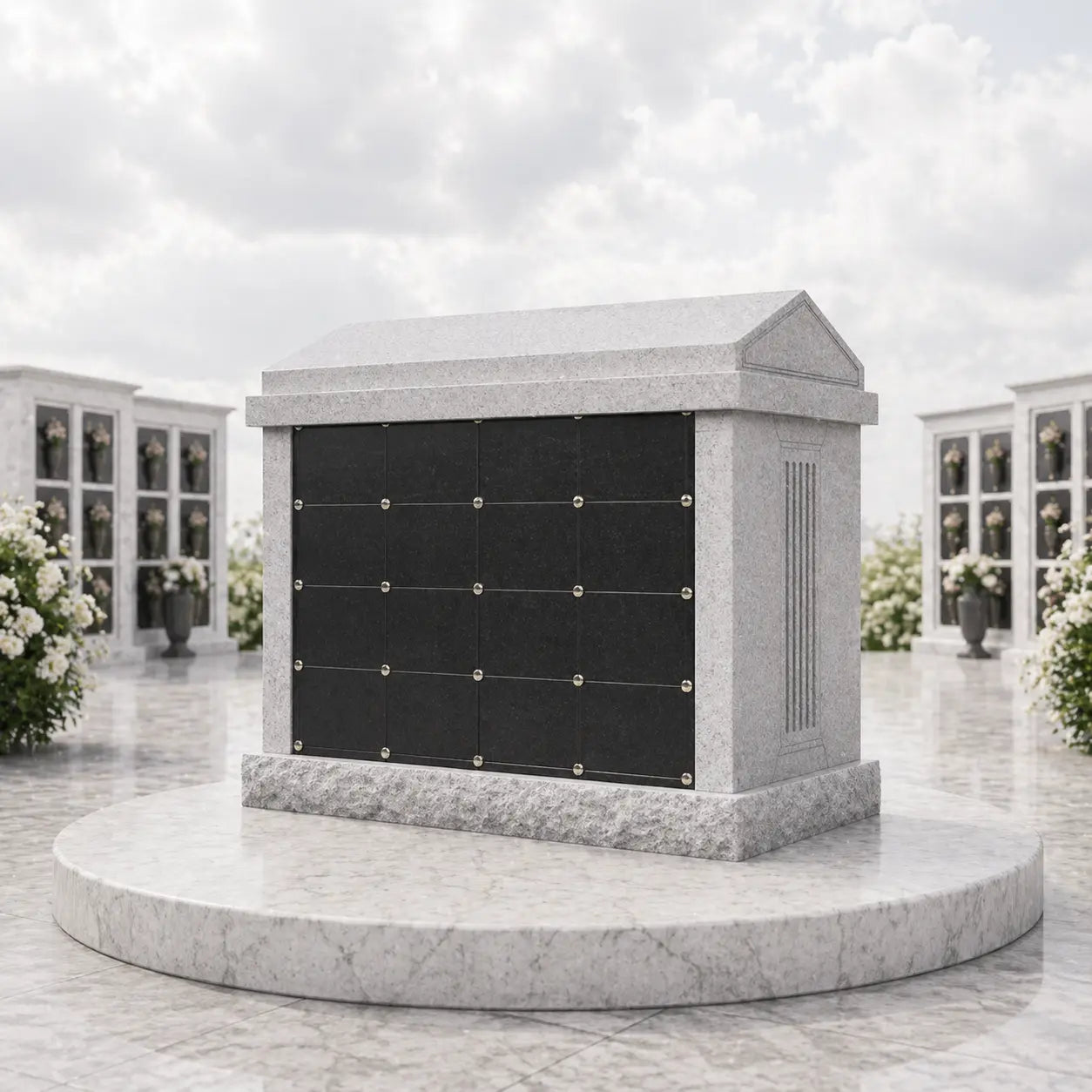
- Niches
- 12, each with its own removable front panel
- Roof
- Gabled — sheds rain off the panel faces
- Typical granite
- Elite Gray or Indian Black Premium
- Foundation
- Reinforced concrete pad, poured and cured before delivery
A 12-niche family monument for a shared cemetery plot
The largest single monument we build from the catalog: twelve niches under one gabled granite roof, usually ordered by a large family or by a group of families sharing one plot.
What decides the design
The first question is never the granite — it is the plot. A twelve-niche monument concentrates a lot of weight on a small footprint, so before we draw anything we ask for the plot dimensions and the cemetery’s monument rules. Most California cemeteries cap monument height and require an approved foundation; we prepare the drawings and load data the cemetery office asks for.
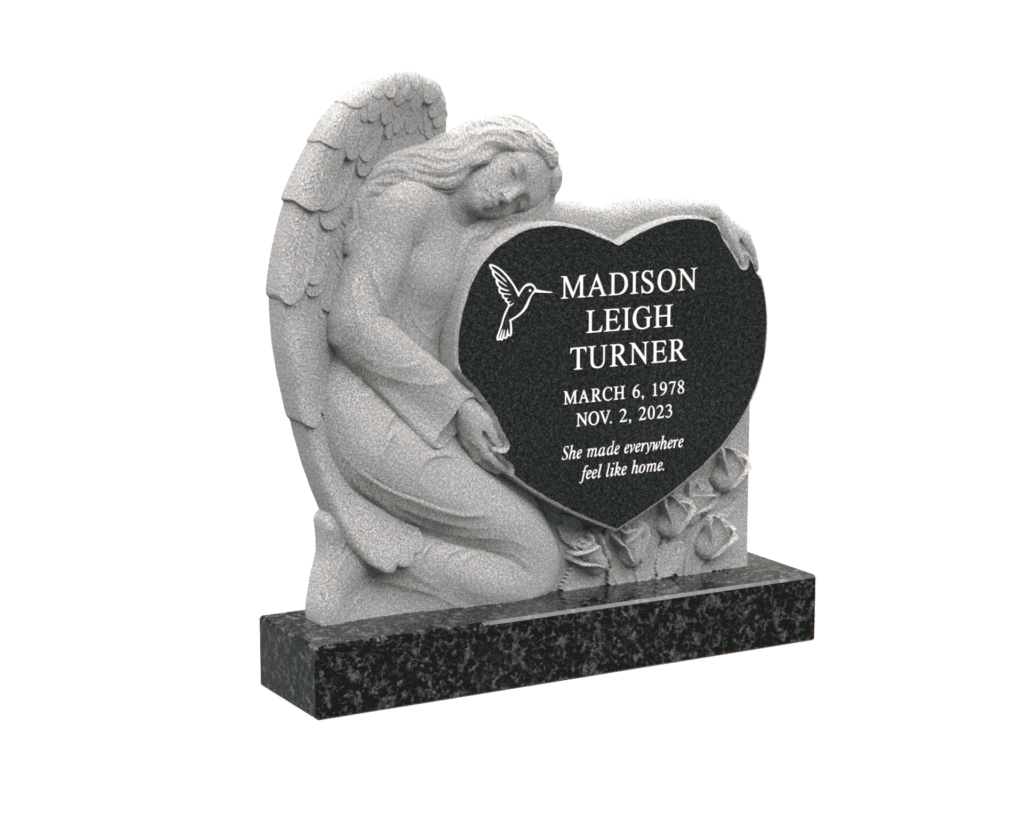
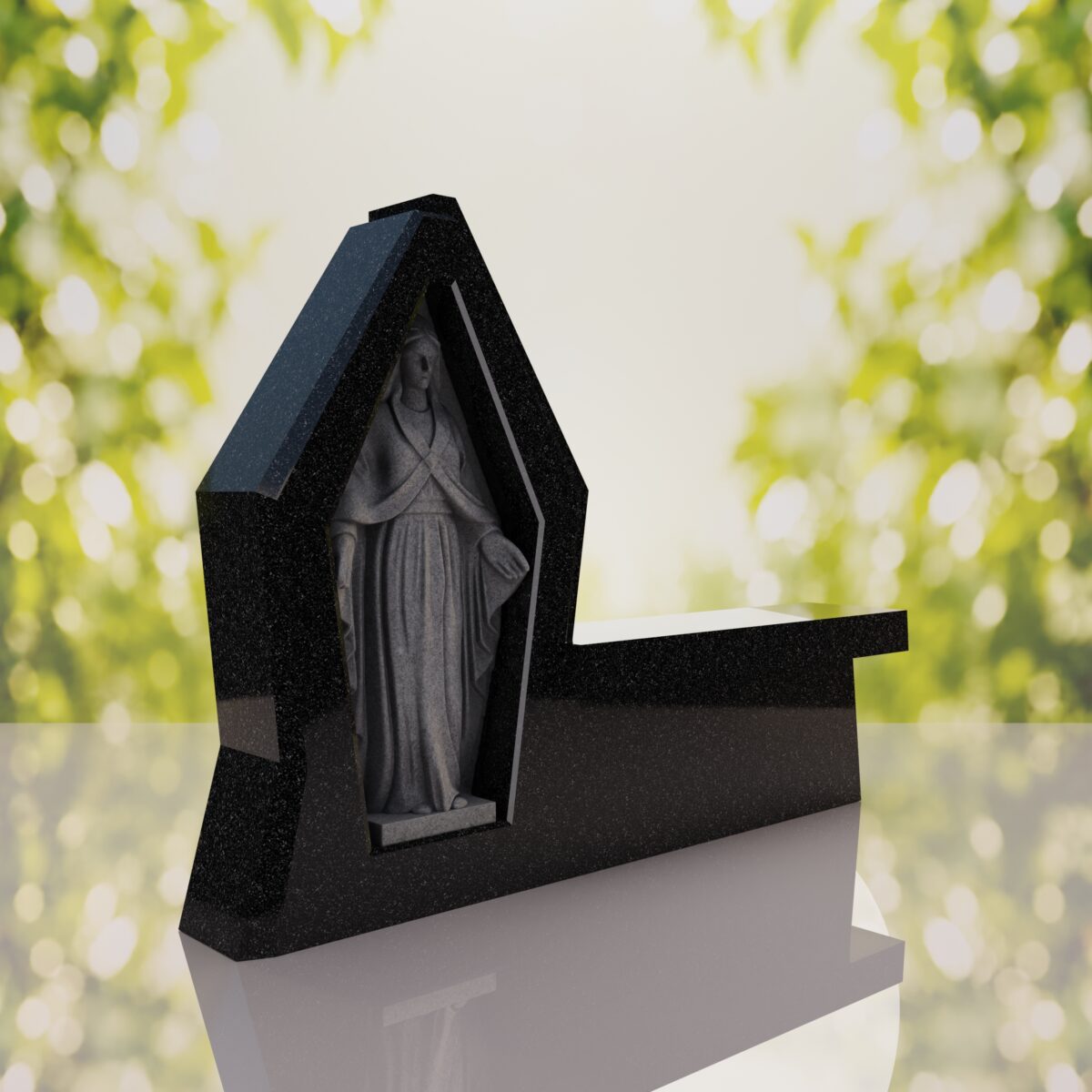
Once the plot clears, the family reviews a free 3D preview: niche layout, roof profile, granite color and the engraving plan for each front panel. Two revision rounds are included, and nothing is cut until the preview is approved in writing.
How it is built and installed
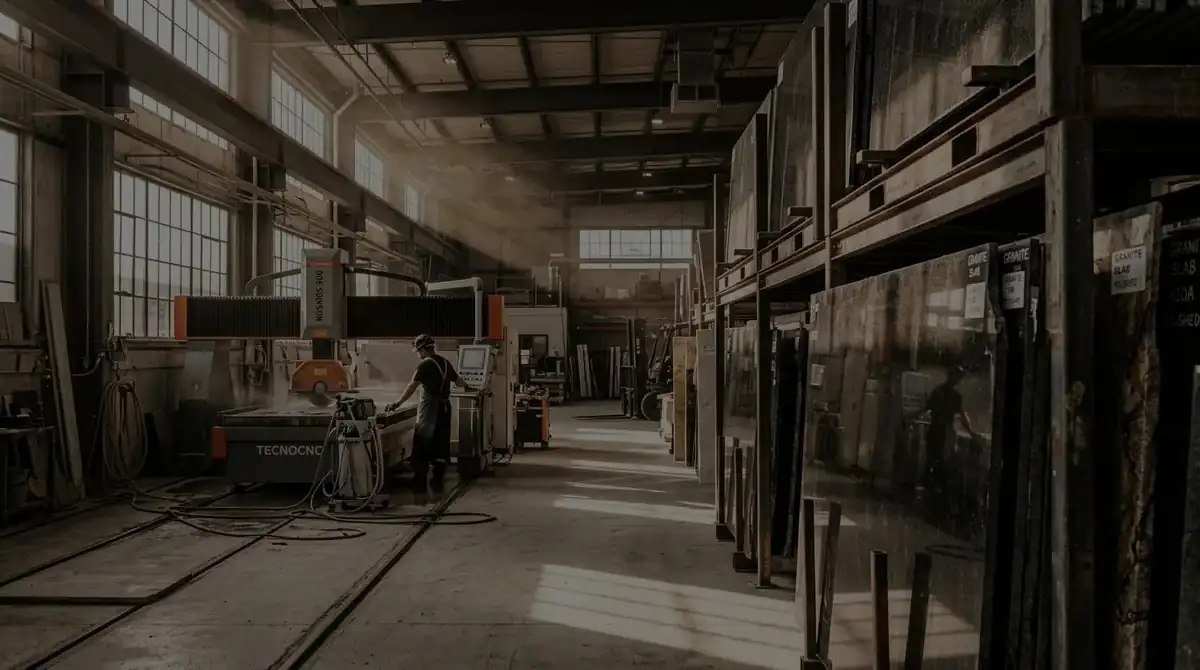
The monument is cut as separate panels, not one block — walls, shelves, front panels and the gabled cap. Each panel is polished on every exposed face, because an unpolished face reads as a shortcut within a few winters. Front panels are engraved in the shop by sandblasting through a rubber stencil, which cuts deeper and lasts longer than surface etching.
On installation day our own crew — the same shop, not a subcontractor — sets the panels with stainless pins and structural adhesive, seals every joint, and checks each niche door for fit. The family receives a photo record of the finished installation, and the structure carries our lifetime structural warranty.
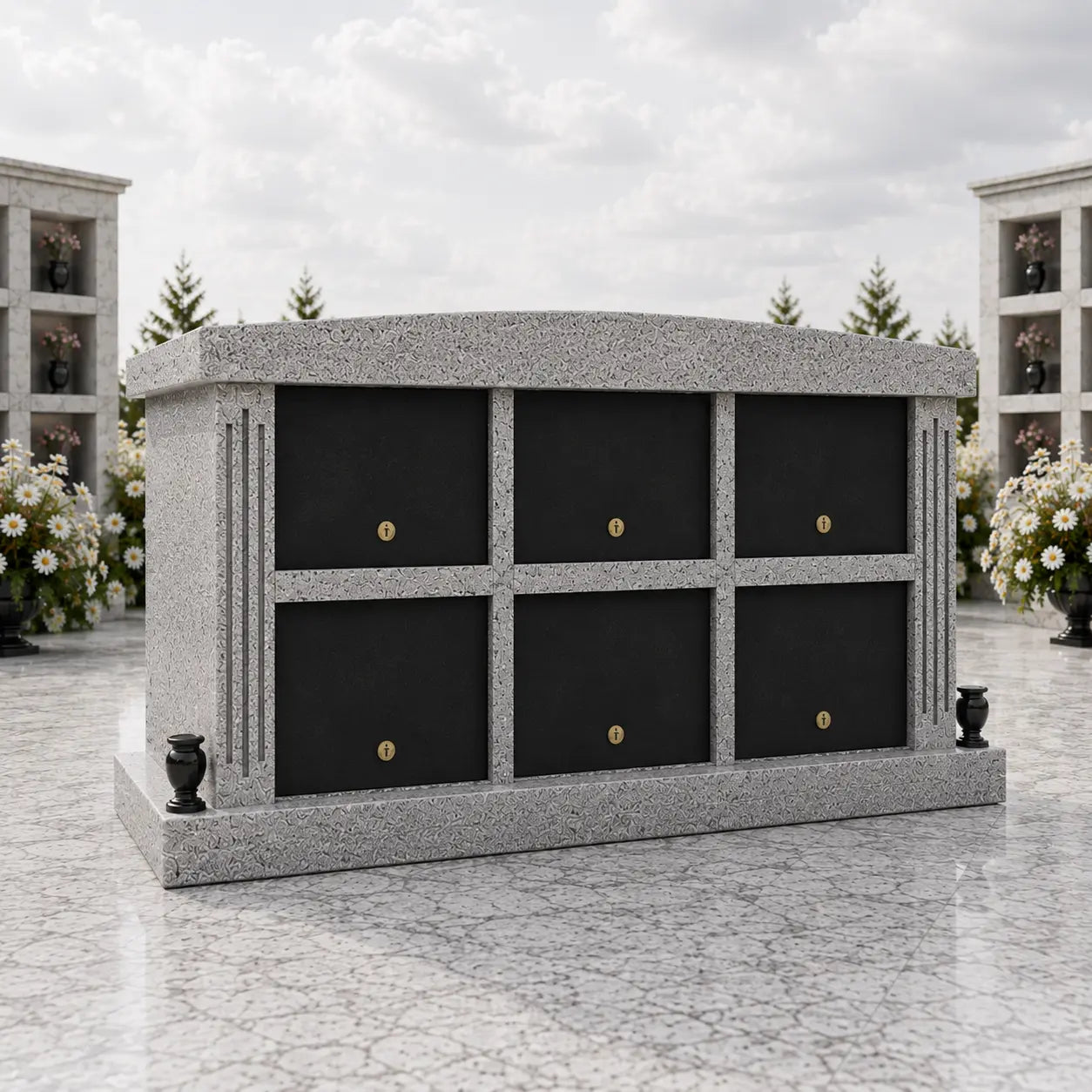
- Niches
- 6, arranged around a central bay
- Top
- Serpentine — a curved profile cut on the diamond saw, then hand-finished
- Typical granite
- Impala Gray, Blue Pearl or Morning Rose
- Engraving
- Per-panel names and dates; central family inscription
A 6-niche serpentine-top columbarium with a central display bay
The most common family size we cut: six niches with a serpentine top, often with the central bay reserved for a shared family inscription or a ceramic portrait.
Why families pick this size
Six niches covers two or three generations without the footprint of a full wall. The serpentine top is not decoration only: the curve breaks up rain flow and softens the monument’s outline against other headstones, which is why cemeteries rarely object to it.
The central bay is the design decision that takes the longest. Some families put the family name there; others a portrait or a short line of scripture. We mock every option up in the 3D preview so the family compares them side by side before approving one.
The detail that matters most
On a six-niche unit the niche front panels must interchange cleanly — over decades, panels come off for each new inscription. We machine the reveals to a consistent gap so any panel can be removed with hand tools, engraved for a new interment, and re-set without disturbing its neighbors. That single detail is the difference between a monument that serves a family for fifty years and one that fights them at every interment.
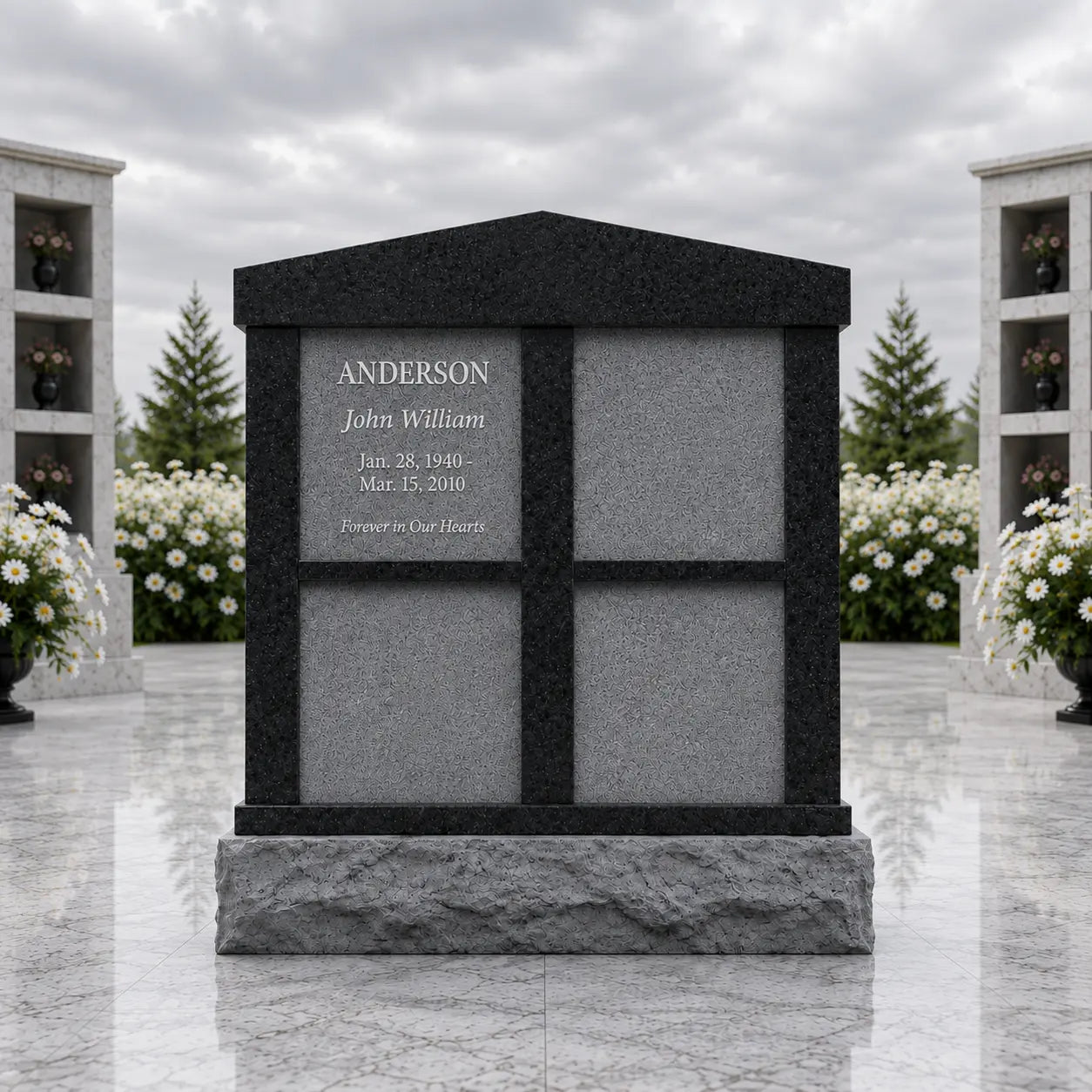
- Niches
- 4, two-by-two
- Top
- Serpentine
- Typical granite
- Indian Aurora, Elite Gray or Carrara White
- Lead time
- Quoted in writing before production; engraving done in-shop
A 4-niche columbarium with a serpentine top for a small family
Four niches in a two-by-two layout — the middle of the range, and the size we most often quote for a married couple planning ahead with room for two more.
Planning ahead without overbuying
Most four-niche orders are pre-need: a couple buying while both are living, with two niches held for children or siblings. The practical advantage is engraving economics — we engrave the first two panels now and hold the remaining panels blank, cut and polished, so a later inscription matches the stone and the letter style exactly.
We keep the engraving layout on file. When a family calls years later, the new panel is cut from the record, not from a guess at what the original mason did.
Granite choice for exposed plots
Four-niche units often go on open lawn plots with full sun. On those we steer families toward darker, denser granites — polished dark stone keeps its contrast against engraved lettering far longer in direct California sun than light stone with shallow etching. When a family wants a light granite like Carrara White, we compensate by cutting the letters deeper and offering a litho-chrome fill so the inscription stays readable.
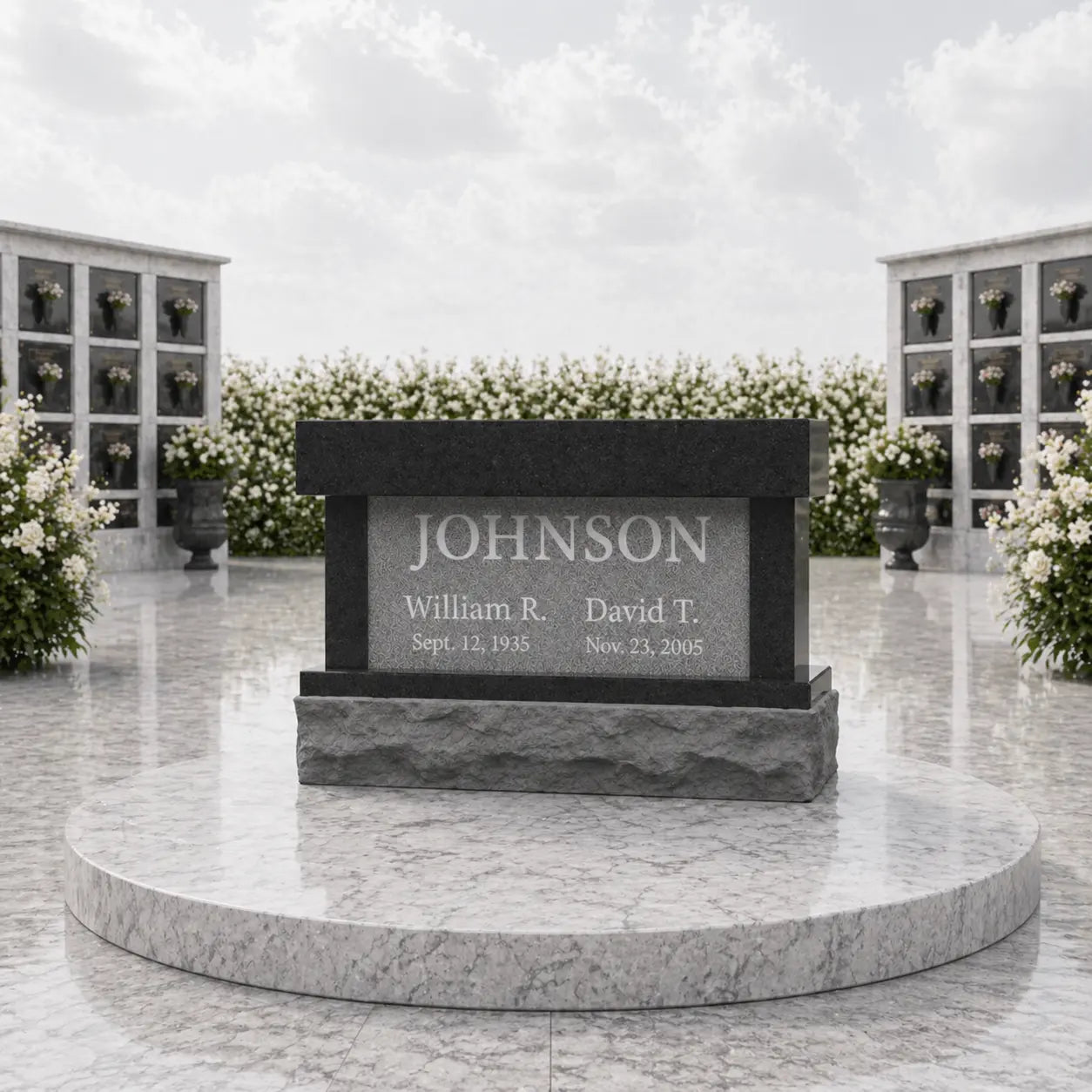
- Niches
- 2
- Footprint
- 42" × 16" base — fits most single plots
- Typical granite
- Any of the nine catalog granites
- Price
- Published on the product page — no quote needed to see it
A compact 2-niche columbarium for a private plot
The entry point to a standing columbarium: two niches for a couple, on a footprint small enough for most single cemetery plots.
Why a small columbarium instead of burial
A two-niche columbarium on a family’s existing plot is often the answer when a cemetery’s ground burial spaces are sold out but the family already owns a monument space. The unit stands above ground, so no excavation permit is needed — only the cemetery’s standard monument approval and foundation.
This is also the model where families most often order the urns from us at the same time, so the urn dimensions are verified against the niche interior before anything ships. An urn that does not fit its niche is the single most common problem we hear about from families who bought the two pieces from different suppliers.
What installation involves
For a unit this size the install is a one-day visit: the crew verifies the cured foundation, sets the base level, pins and bonds the body, seals the joints, and fits both niche panels. The family gets the same photo record and the same lifetime structural warranty as the largest monument we build.
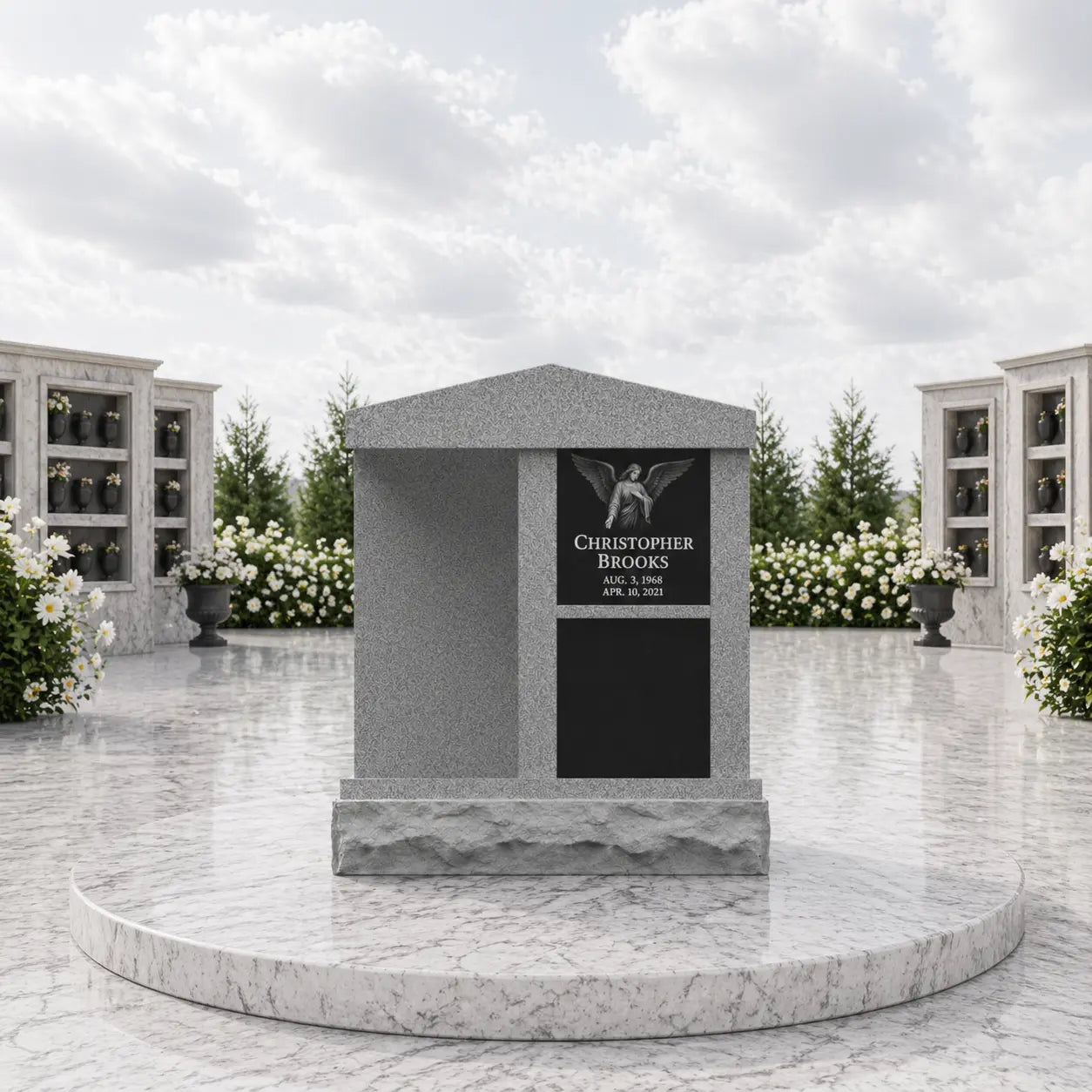
- Levels
- 2 stacked niche rows
- Profile
- Flat cap, square shoulders, minimal reveals
- Typical granite
- Elite Gray, Impala Gray, two-tone pairings
- Best fit
- Contemporary cemetery sections and memorial gardens
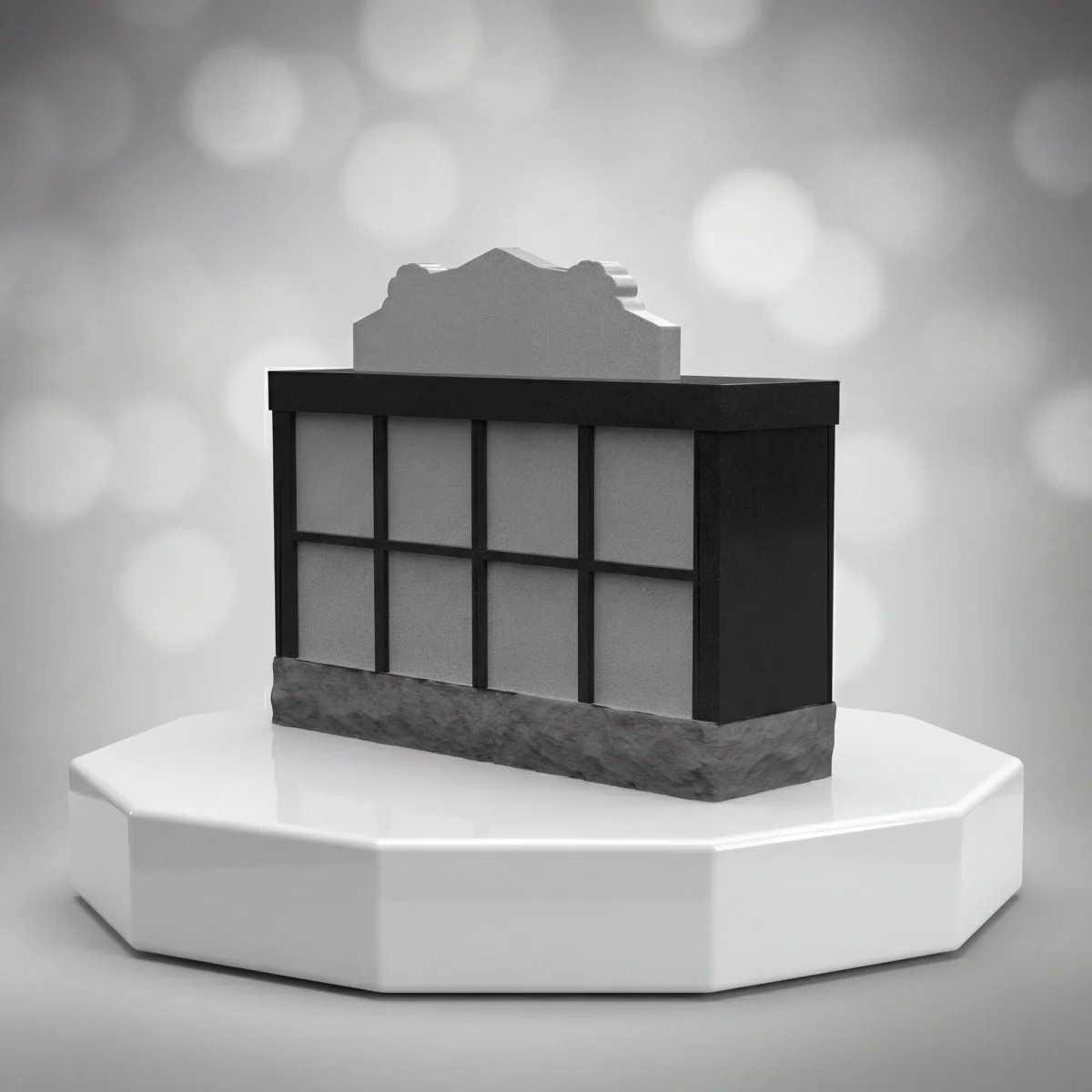
A modern two-level columbarium for a contemporary section
A flat-profile, two-level design for cemeteries and families who want clean modern lines instead of a traditional gabled or serpentine silhouette.
The discipline of a modern design
A modern monument is less forgiving than a traditional one. With no roof profile or moldings to draw the eye, every joint line shows — so panel edges are cut and polished to a tighter tolerance, and we dry-fit the whole unit in the shop before it ships. A gap that would disappear under a serpentine cap is visible from ten feet on a flat-cap design.
Two-tone pairings — a dark body with a light cap, or the reverse — are cut from two granite lots we match in the shop under the same light. Ordering the two stones from separate suppliers is how mismatched two-tone monuments happen.
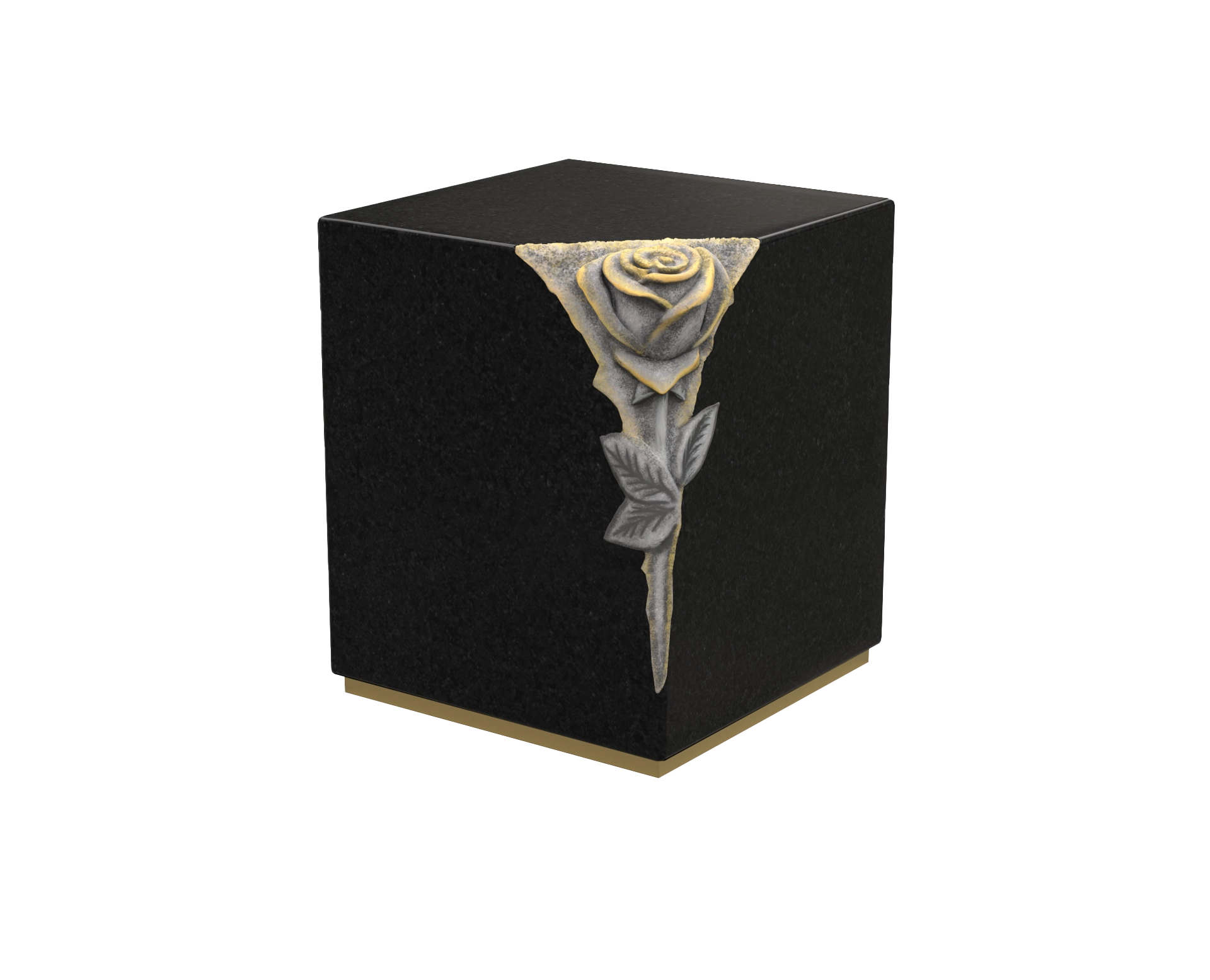
- Material
- Solid granite, polished on all faces
- Engraving
- Names, dates, emblems — sandblasted, not laser-surface
- Matching
- Granite matched to an existing monument on request
- Price
- From $375 — published on each product page
A matched granite urn with custom engraving
Not every project is a monument. A large share of our work is single granite urns — engraved in-shop, often matched to the granite of an existing family columbarium or headstone.
Matching stone across years
Granite is a natural material: two blocks of the same commercial name can differ in grain and tone. When a family asks us to match an urn to a monument set years ago, we ask for a photo in daylight and, where possible, the original stone name. We then select the urn blank from the lot that reads closest — and we tell the family honestly when an exact match is not achievable, so the decision is theirs before we cut.
Deep sandblasted engraving on an urn serves the same purpose it does on a monument: the inscription survives handling, weather and time. Surface-lasered granite looks sharp on day one and fades where fingers touch it; cut letters do not.
Every project, large or small, includes the same guarantees
An itemised written quote before production. A free 3D design preview with two revision rounds. Sandblasted engraving done in our own shop. Delivery and installation by our own crews in all 50 states, priced inside the quote. A photo record of the finished installation. A lifetime structural warranty, a price-match guarantee and 0% financing for up to twelve months. Catalog prices run $375 – $16,423.
Or start with the buying guide, browse the catalog or read about custom design.